The Pattern
Real Towns, Fictional Names
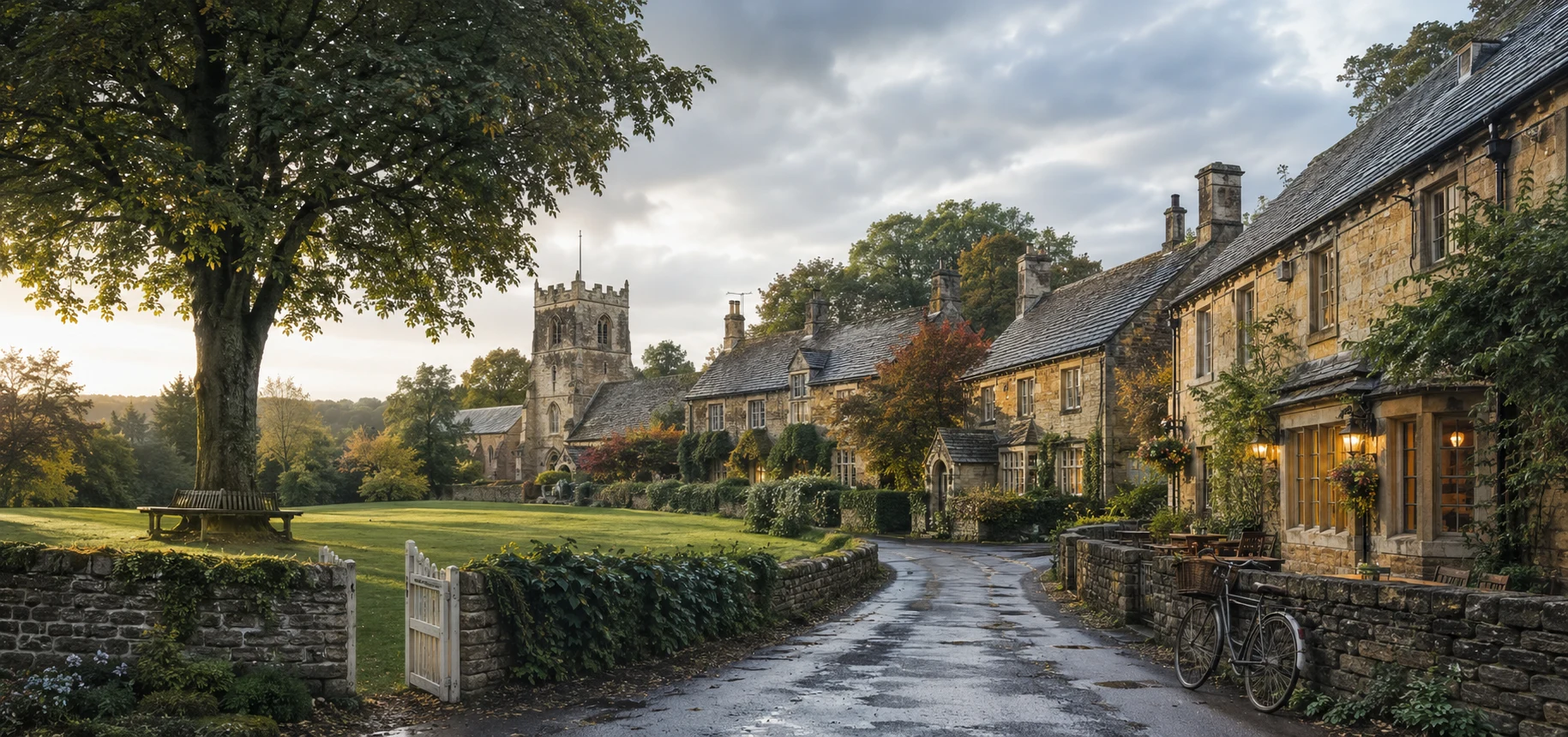
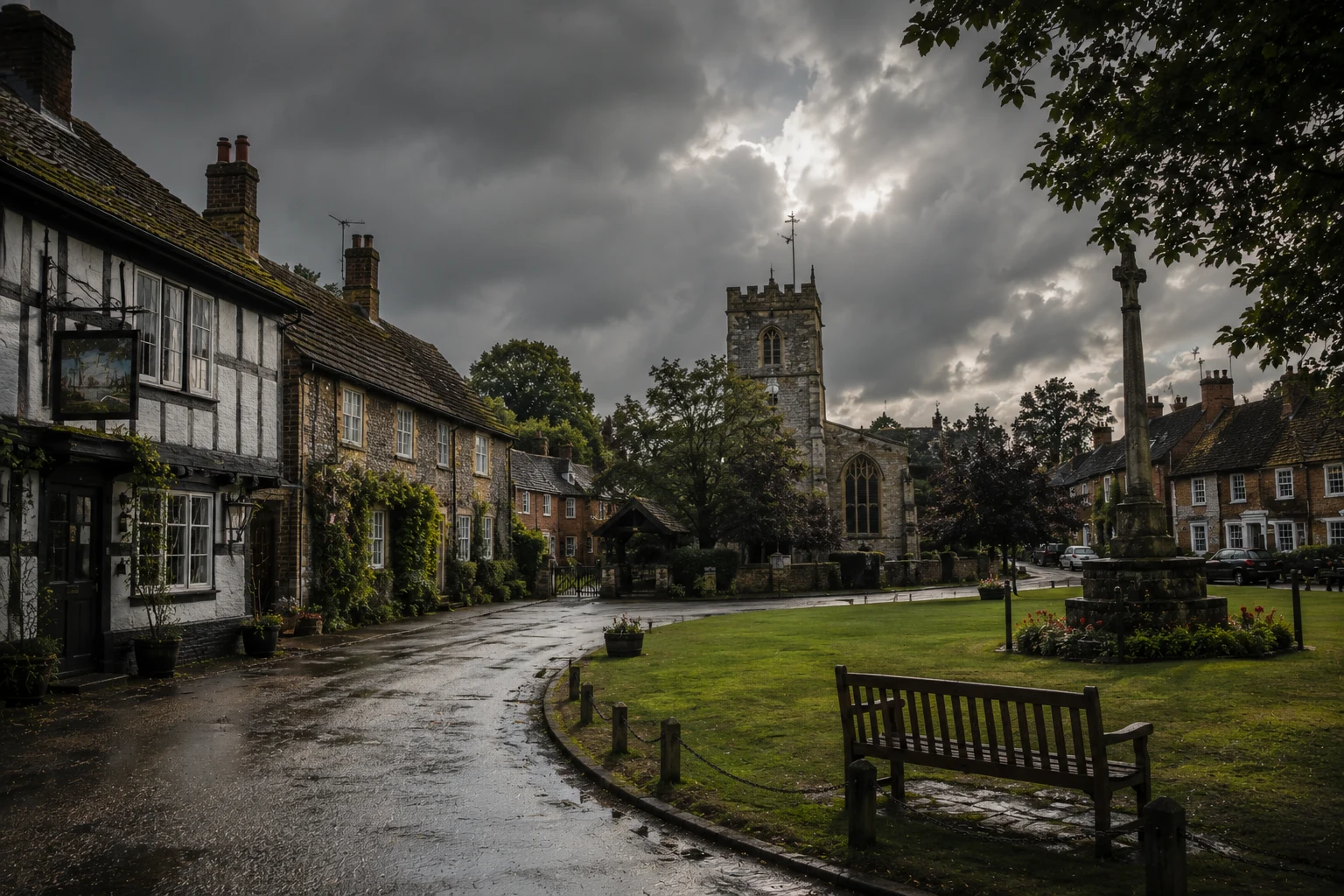
The same handful of real towns reappear across dozens of episodes, standing in for different fictional Midsomer villages depending on the story — a single high street might play Badger's Drift one season and Midsomer Parva the next.
OxfordshireBuckinghamshireChilterns
At a Glance
Series 1 Aired1997
Core RegionChilterns (Oxon & Bucks)
OccasionalSurrey
Stand-In For Causton
Wallingford
Wallingford is one of the two towns that together supply most of Causton's scenes, alongside Thame — though the fictional town is really a composite built from several real places. Wallingford's cobbled Market Square appears repeatedly, and the Grade II-listed Corn Exchange on the square has stood in as the Causton Playhouse across multiple episodes.
Market TownRecurring Location
At a Glance
PlaysCauston
CountyOxfordshire
LandmarkMarket Square & Corn Exchange
The Opening Credits
Warborough
Look closely at the show's opening titles and you may spot Warborough's village green — the village has featured in seven separate locations across the series. Its historic thatched pub, the Six Bells, has appeared repeatedly throughout the show's run, including several times as "The Black Swan," the local pub in the recurring fictional village of Badger's Drift.
Village GreenHistoric Pub
At a Glance
CountyOxfordshire
PubThe Six Bells
Featured InSeries 1 & more
Riverside Village
Dorchester-on-Thames
Regularly cited as one of the prettiest of the recurring Midsomer villages, Dorchester-on-Thames contributes its historic coaching inns and the Abbey Church of St Peter and St Paul, whose atmospheric interior has appeared in multiple episodes.
Historic AbbeyCoaching Inns
At a Glance
CountyOxfordshire
LandmarkDorchester Abbey
Regatta Town
Henley-on-Thames
The real Henley Royal Regatta inspired the show's own Midsomer Regatta episode — filmed on Henley Bridge and the surrounding riverbanks — though naturally the fictional version's day out at the river ends rather less pleasantly than the real one.
River ThamesRegatta
At a Glance
CountyOxfordshire
LandmarkHenley Bridge
Blink and You'll Miss It
Watlington
This small Oxfordshire town has quietly done double duty as Causton's library, one of the many small, easy-to-miss ways the production reuses the same real towns to build out Midsomer's fictional geography.
Small Town
At a Glance
CountyOxfordshire
PlaysCauston Library
One of the Most-Filmed Towns
Thame
Thame rivals Wallingford as one of the show's most heavily used locations, with more than 20 documented filming spots around town. Its own Town Hall has been dressed as Causton Town Hall so often that the local tourist office keeps a "Causton" sign on hand for visitors' photos, and the same building has also stood in as the Causton Arts Centre in other episodes.
Most-Filmed TownPhoto Op
At a Glance
CountyOxfordshire
PlaysCauston Town Hall & more
Locations20+ documented sites
Since the Very First Episode
Amersham
Amersham's historic High Street has been a Midsomer Murders location since the show's very first episode in 1997, and film crews have returned to it regularly ever since — its old town has stood in for more different fictional villages than almost anywhere else on this list.
High StreetRecurring Since 1997
At a Glance
CountyBuckinghamshire
First UsedSeries 1, 1997
Causton Station
Beaconsfield
Beaconsfield railway station, on the Chiltern Main Line, has repeatedly been dressed with temporary Causton signage to stand in as the fictional town's train station. Beaconsfield is also home to Bekonscot Model Village, memorably used in the 2009 episode "Small Mercies" for a murder scene staged like a miniature Gulliver among the tiny buildings.
Railway StationModel Village
At a Glance
CountyBuckinghamshire
PlaysCauston Station
AlsoBekonscot Model Village
Village Pub
Little Missenden
The Red Lion in Little Missenden has played the village pub of the fictional Midsomer Magna (in the episode "Destroying Angel," among others) and has appeared under several other names across the series — one of the genuine Chilterns pubs the production returns to whenever a story needs a proper English local.
Historic Pub
At a Glance
CountyBuckinghamshire
PlaysMidsomer Magna Pub
The Wider Cluster
Turville, Hambleden & Fingest
This tight cluster of Buckinghamshire villages, just a few miles from the Oxfordshire border, shows up again and again as favourite backdrops, alongside grand country houses like Chenies Manor House and the Mapledurham Estate whenever a story calls for a manor house murder.
Village ClusterCountry Houses
At a Glance
CountyBuckinghamshire
Also NearbyChenies Manor, Mapledurham
Getting There
Self-Guided or Guided Tour
All locations are within an easy day trip of London, mostly under an hour by car or train.
Good to know: Several tour operators run dedicated Midsomer Murders coach and walking tours covering Wallingford, Warborough, and the surrounding villages in a single day, for anyone who'd rather not plan the route themselves.
Prefer to plan your own route?
The Midsomer Murders Location Guide
A published guidebook pinpointing the villages, pubs, and country houses used throughout the series.
Find the Guidebook →
Is Midsomer a real place?
No. Midsomer County is fictional, but the show films almost entirely in real villages and towns across Oxfordshire and Buckinghamshire, with occasional scenes in Surrey.
Where is Midsomer Murders actually filmed?
Most filming takes place in the Chilterns area spanning Oxfordshire and Buckinghamshire — towns and villages including Wallingford, Thame, Warborough, Dorchester-on-Thames, Henley-on-Thames, Watlington, Amersham, and Beaconsfield recur across many episodes.
What town plays Causton?
No single town is used exclusively. Wallingford and Thame both provide the bulk of Causton's scenes — Wallingford for its Market Square and the Corn Exchange (as the Causton Playhouse), Thame for its Town Hall (as Causton Town Hall) — with other towns filling in specific buildings and scenes.
Can you visit the Midsomer Murders filming locations?
Yes. All of the villages are real, public places you can visit independently, and several companies also run guided coach or walking tours specifically covering Midsomer Murders locations.
Is there a Midsomer Murders location guidebook?
Yes, Batsford Books publishes a dedicated Midsomer Murders location guide pinpointing the real villages and landmarks used throughout the series.
How many different filming locations has the show used?
Across more than 25 series, Midsomer Murders has used dozens of villages, churches, pubs, and country houses — far too many to list in full, though the same handful of towns like Wallingford and Amersham reappear most often.
Fact-checked September 2026 against multiple independent sources. Spot an error? Let us know via the contact page.